
Nigeria received $22.79 billion in personal remittances in 2025, according to the latest World Bank data, up 3% from $22.13 billion a year earlier. Remittances were equivalent to 7.8% of the country’s GDP. The UK remains a significant part of that market. The latest country-level breakdown from Nigeria’s National Bureau of Statistics shows that Britain accounted for $12.38 billion of inward remittances in 2023, making it the largest recorded source that year.
For Nigerians sending money from the UK, however, the amount received can vary considerably between providers. World Bank data collected in August 2025 shows differences in fees and exchange-rate margins across the UK-to-Nigeria corridor, with the total cost of some transfers ranging from close to zero to more than 6%. That makes the exchange rate, fees, and final naira amount important factors when comparing remittance apps.
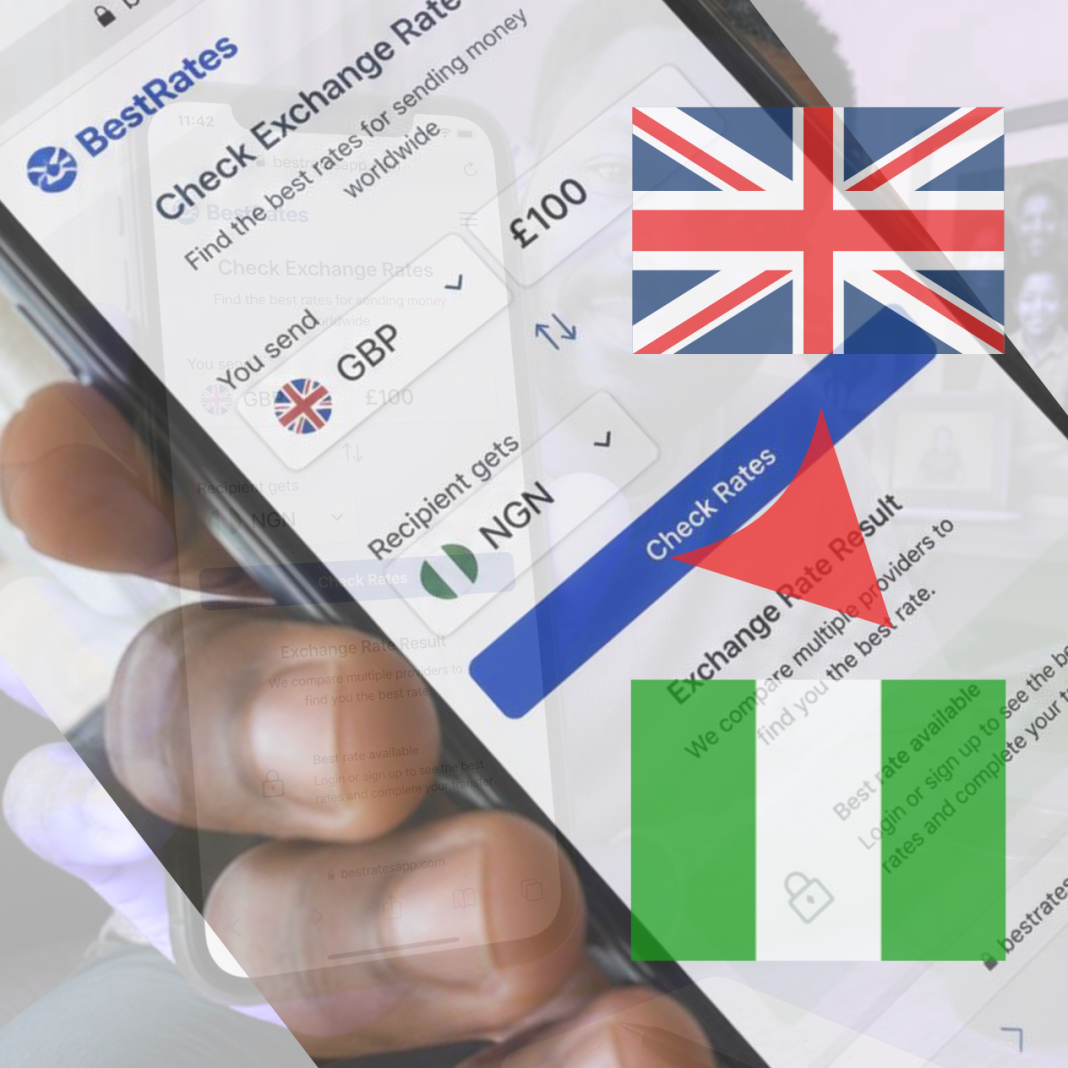
If you are sending a quick £100 home to family or friends in Nigeria, the platform you choose changes exactly how much cash hits their account. To find out which remittance provider delivers the highest payout right now, TechDisrupt ran a live benchmark test using Best Rates (bestratesapp.com), setting our transfer amount to £100 GBP destined for Nigerian Naira (NGN).
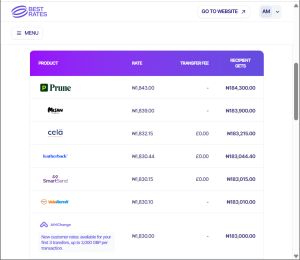
Leading the top 7 ranking is Prune, which offers ₦184,300 at an exchange rate of ₦1,843 per £1. At the other end of this ranking, AfriChange delivered ₦183,000, highlighting a tight competitive spread. With all providers offering delivery within minutes, here is how the top 7 UK-Nigeria remittance providers stack up by exchange rate:
| Rank | Provider | Exchange Rate (₦) | Transfer Fee (£) | Exact NGN Received (₦) |
| 1 | Prune | 1,843.00 | 0.00 (Implied) | 184,300.00 |
| 2 | Misan by Bamboo | 1,839.00 | 0.00 (Implied) | 183,900.00 |
| 3 | Cela Remit | 1,832.15 | 0.00 | 183,215.00 |
| 4 | Leatherback | 1,830.44 | 0.00 | 183,044.00 |
| 5 | SmartSend | 1,830.15 | 0.00 | 183,015.00 |
| 6 | VeloRemit | 1,830.10 | 0.00 (Implied) | 183,010.00 |
| 7 | AfriChange | 1,830.00 | 0.00 (Implied) | 183,000.00 |
Source: Beta Rates | Data accessed at 10:08 AM, September 21, 2026
Inside the Top 7 Platforms Powering the UK–Nigeria Corridor
- Prune Payments: Based in the UK, Prune Payments is a cross-border money transfer platform founded in 2024 by Ibrahim Ibitade, former co-founder and CEO of Leatherback. The startup is registered in the UK as an Authorised Payment Institution regulated by the Financial Conduct Authority (FCA) and registered with HM Revenue & Customs (HMRC).
- Misan by Bamboo: Misan by Bamboo (formerly known as Coins by Bamboo) is a borderless remittance and cross-border fintech app launched in 2025 by the popular Nigerian investment platform, Bamboo, founded by Richmond Bassey and Yanmo Omorogbe. Registered as a Money Service Business (MSB) regulated by the Financial Transactions and Reports Analysis Centre of Canada (FINTRAC) in Canada, Misan enables users to send money across over 15 African countries.
- Cela Remit: Cela Remit is an international remittance and cross-border money transfer service founded in 2018 with active operations across the UK, Nigeria, and Ghana and plans to expand to more destinations. The UK fintech is led by Sarafadeen Abiola Ayinla.
- Leatherback: Founded in 2019 by former CEO Ibrahim Ibitade, Leatherback is a UK-founded cross-border payments app allowing users to transact across 180+ countries. Since 2024, the fintech company has undergone leadership changes, with Nigerian financial services company Zedcrest Group’s recent acquisition of Leatherback under the leadership of current CEO Ochebhoya Ekpete.
- SmartSend: Founded by Olusegun Enitan Dada and Kola Bello in 2023, SmartSend is an international fintech remittance service operating under SmartSend Finance. It is designed specifically for the African diaspora to send, receive, and convert money across global borders seamlessly.
- VeloRemit: Founded in 2020, VeloRemit is a UK-based cross-border remittance service tailored for migrants and the African diaspora to send money back home quickly and affordably. It focuses on streamlining the money transfer pipeline from Western nations to sub-Saharan Africa.
- AfriChange: AfriChange is a cross-border remittance and multi-currency platform founded in 2020 by CEO David Ajala. Originally built to simplify financial channels between North America and Africa, it has scaled globally into a comprehensive network connecting individuals and small-to-medium enterprises (SMEs)
What Founders Need to Know Before Launching in the UK-Nigeria Corridor
For African founders, particularly those looking to build around the UK-Nigeria corridor, here is a playbook.
- Compliance
Operating in both the UK and Nigeria markets means answering to two different regulatory ecosystems. In the UK, fintechs must navigate stringent oversight from the Financial Conduct Authority (FCA) and HM Revenue & Customs (HMRC) regarding anti-money laundering and consumer safeguarding. In a similar vein, moving funds directly into Nigeria requires the approval of the Central Bank of Nigeria (CBN) via an International Money Transfer Operator (IMTO) licence or local banking partnerships.
Africhange Secures IMTO Licence in Ghana, Expands Regulatory Operations
AfriChange serves as an example of a startup that invested heavily in direct regulatory positioning. From registering with the Financial Transactions and Reports Analysis Centre of Canada (FINTRAC) in Canada, the company has subsequently secured IMTO licences in Nigeria and Ghana, granting it the muscle to handle transactions without relying on third-party aggregators. Although this process is famously hard, some startups plug into the Authorised Payment Institution (API) licence. For instance, Cela Remit uses an embedded financial infrastructure, partnering with FCA-regulated payment rail, Payceler, to ensure UK compliance while using licenced local settlement partners in Nigeria to handle payouts.
2. FX Resilience
Cross-border payment and remittance startups are sustained by their liquidity management. When a user in the UK initiates a £100 transfer, the platform must instantly disburse Nigerian Naira to the recipient’s bank account or mobile wallet before the GBP clears and settles on the UK side. If a founder miscalculates interbank liquidity or experiences settlement delays during a sudden Naira devaluation spike, the startup absorbs severe foreign exchange (FX) losses on that transaction spread.
Unlike traditional payment companies, cross-border builders must maintain float pools in multiple currencies, in this case, GBP and NGN, to ensure instant settlements. Currency volatility and fluctuating interbank liquidity can erode margins in a sweep, making real-time treasury management vital for sustenance.
3. Moving Beyond Remittances
Zero-fee remittance models are incredible customer acquisition hooks, but they are difficult to monetise sustainably based on transfer volume alone. Not only is this script now overplayed in the market, but there are often different options for a consumer, pointing to the oversaturation of remittance and cross-border service platforms. As demonstrated by market leaders like Misan by Bamboo, AfriChange, and Unicorn Chipper Cash, among others, the long-term playbook requires evolving past only money movement into high-margin financial utilities such as multi-currency corporate wallets, virtual USD cards for remote workers, trade financing for SMEs, and many other frontier innovations. The core product is just the entry point; the real value lies in owning the diaspora’s broader financial life.
Fintechs to Watch: The fintechs making UK–Africa payments faster and fairer