
The UK’s Compound Semiconductor Applications Catapult has officially relaunched as the Semiconductor Catapult, expanding its core national mandate to develop hardware architectures for artificial intelligence, defence, and other vital industries.
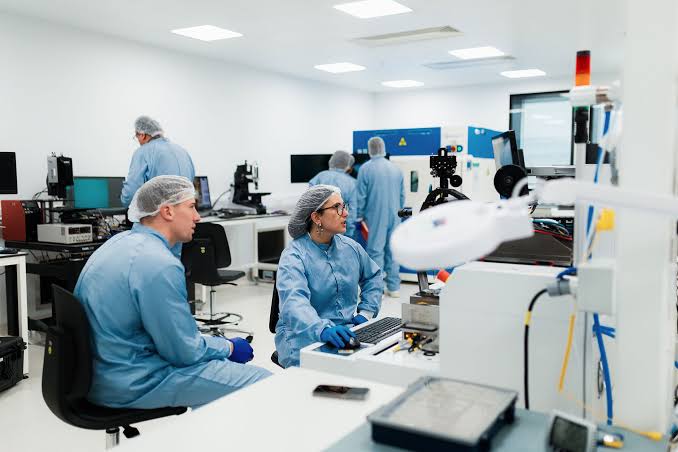
The government-backed technology centre will operate physical research and testing infrastructure across site hubs in Newport, Bristol, and Glasgow. Serving as a bridge between pure laboratory research and large-scale commercial deployments, the Catapult provides local startups, SMEs, and enterprise chip companies with direct access to highly specialised equipment, engineering talent, and cleanrooms.
The expansion is directly tied to the revenue amassed by semiconductor companies between 2024 and 2025 at an estimated £10.6 billion. With 297 dedicated semiconductor companies employing around 16,350 citizens across the country, the UK is betting its state infrastructure on the idea that native hardware design can break foreign monopoly strangleholds.
This development matches the broader £1.1bn AI Hardware Plan to shield local high-growth deep tech from global chip supply shocks and retain the domestic value generated by computing hardware. The plan commits £750 million to fund a national AI supercomputer alongside £400 million earmarked for purchasing top-tier, next-generation AI processors. Out of that hardware procurement allocation, £150 million is legally ring-fenced to purchase novel chips directly from domestic UK hardware companies and early-stage startups. An additional £18 million will fund high-priority hardware security research and development programmes to harden domestic critical infrastructures.
To streamline high-performance chip validation, the expanded Catapult will concentrate its engineering assets into four technical specialisations, including advanced packaging and heterogeneous integration, power electronics and thermal management, photonics and optical interconnects, and RF and mixed-signal integration.
The centre’s layout strategy rolls out through two explicit phases. The immediate initial phase focuses on core silicon integration capabilities, allowing emerging startups to validate architectural pipelines and systematically strip out costly engineering risks. The second phase is set to provide small-volume production capabilities and system-level scaling to prepare companies for market commercialisation.
“The market opportunity for the UK in AI hardware and defence is moving quickly,” stated Caroline O’Brien, Chief Executive of the Semiconductor Catapult. “The Semiconductor Catapult ensures more of the technologies, supply chains and economic benefits created by semiconductor innovation are developed and retained in the UK.”