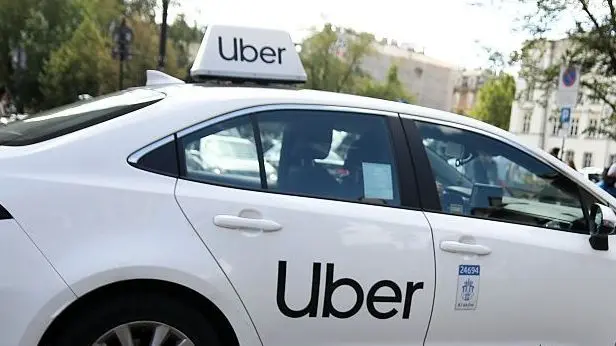

Uber has begun testing autonomous vehicles in Manchester as it expands its plans for driverless ride-hailing in the UK, raising fresh questions about the future of private-hire drivers whose livelihoods depend on app-based transport services.
The trial uses autonomous driving technology developed by Chinese self-driving company Pony.ai and Croatian robotaxi operator Verne. The companies previously worked with Uber to launch a commercial robotaxi service in Zagreb, Croatia.
The Manchester tests are currently focused on mapping city streets, with safety drivers behind the wheel and no passengers being carried. Transport for Greater Manchester has confirmed that no formal application to operate a commercial driverless taxi service in the region has been submitted.
Uber said the trial was a first step towards making autonomous mobility available to more people across the UK. The company is targeting robotaxi operations in as many as 15 cities worldwide by the end of 2026, primarily in the United States and the Middle East.
Robotaxis put driver livelihoods under scrutiny
The expansion comes as unions representing taxi and private-hire drivers warn that autonomous vehicles could reduce demand for human drivers and put jobs at risk.
The GMB and the App Drivers and Couriers Union (ADCU) have raised concerns about potential employment losses as robotaxi services expand. The GMB has called for a transition fund, potentially financed through a levy on autonomous vehicle operators, to support drivers who lose jobs or experience reduced earnings.
The concerns are particularly relevant to workers whose income depends on driving for ride-hailing platforms. For drivers who have invested in vehicles, licensing and other work-related costs, a reduction in available fares could have consequences beyond the loss of employment alone.
However, Manchester’s current trial does not yet represent the commercial replacement of human drivers. The vehicles are being tested with safety drivers, and no application to begin passenger services has been made.
Why the issue matters for African drivers in Britain
The potential employment impact also raises questions about how automation could affect migrant workers and Black communities represented in the UK’s private-hire sector.
Transport for London recorded 14,599 licensed private-hire drivers identifying as Black or Black African in London as of January 2026. That figure provides evidence of significant African representation in the capital’s licensed private-hire workforce, although ethnicity data does not establish how many drivers are immigrants or use Uber specifically.
For drivers who depend on private-hire work, the implications of automation will depend on how quickly commercial services expand, whether autonomous fleets operate alongside human drivers or replace some trips, and how the economics of ride-hailing change.
There are also questions about whether drivers will have access to retraining, alternative employment or financial support if autonomous services materially reduce demand for their work.
These concerns are not limited to Manchester. Uber began limited passenger services using autonomous vehicles in London in September, with safety drivers in the vehicles under the capital’s private-hire licensing arrangements.
Commercial rollout remains uncertain
Despite the latest tests, a commercial robotaxi service in Manchester is not yet approved. Transport for Greater Manchester has said safety must remain the priority and that any future operation would require appropriate assurances.
The wider rollout also faces questions about accessibility, congestion, public transport and the regulation of autonomous passenger services. A London Assembly transport committee has called for greater local authority over decisions concerning driverless taxi operations.
For Uber, autonomous vehicles represent a potential way to expand its mobility network through partnerships with technology developers and vehicle operators. For drivers, the same model raises questions about who benefits from greater automation and who bears the cost if demand for human labour declines.
The immediate development in Manchester is a testing programme, not a confirmed timetable for eliminating driving jobs. But as robotaxi trials spread across UK cities, policymakers will face growing pressure to consider the employment consequences alongside the technology’s safety and commercial potential.