
London-based venture capital firm Plural has closed a €1 billion fund to invest in European technology startups, more than doubling the size of its previous fund as Silicon Valley investor Sequoia Capital prepares to close its London office.
The contrasting decisions illustrate two approaches to financing Europe’s technology industry. Plural is expanding its locally managed capital, while Sequoia says it can continue backing European founders from California. The developments come as startups developing chips, artificial intelligence and industrial technologies seek larger pools of funding to compete globally.
Plural’s third fund will focus on early-stage companies working in AI, semiconductors, defence technology, energy and advanced manufacturing. About two-thirds of the money is intended for new investments and one-third for existing portfolio businesses. The firm could back around 30 additional companies, according to the Financial Times.
Plural doubles down on capital-intensive technology
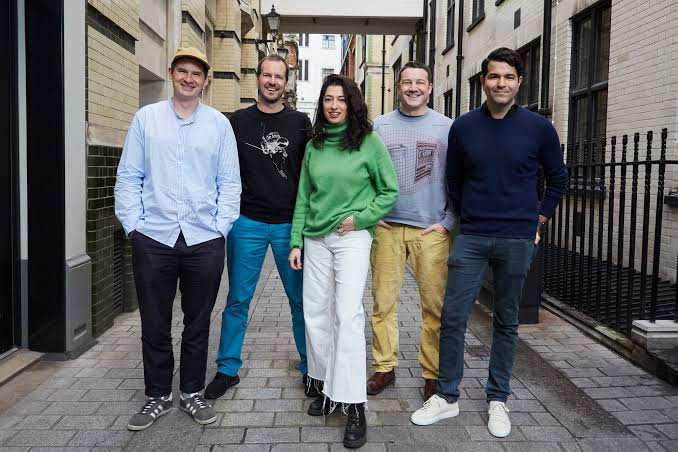
The €1 billion fund is two and a half times the €400 million raised for Plural’s second vehicle in 2024. Founded in 2022 by technology entrepreneurs including Wise co-founder Taavet Hinrikus, Sten Tamkivi, Ian Hogarth and Khaled Helioui, the firm has invested in defence technology developer Helsing, nuclear fusion startup Proxima Fusion and companies working in computing, robotics and manufacturing.
Unlike conventional software businesses, many of these startups require years of research, engineering and regulatory approvals before reaching substantial commercial revenue. Their financing needs can be considerable long before investors can judge them by familiar metrics such as recurring sales or profit margins.
Plural partner Khaled Helioui told Resilience Media that European founders are attempting projects that need more capital from the outset and investors capable of supporting them through later stages of growth.
The firm’s existing portfolio spans defence, computing, energy, industrial automation and healthcare. But the new fundraising does not mean €1 billion has already been invested in startups. The fund’s impact will depend on future dealmaking, follow-on financing and whether portfolio companies can convert technical progress into commercial contracts.
Sequoia closes its London office
Plural’s fundraising comes less than two weeks after Sequoia Capital announced it would shut its London office, which opened in 2020. The US venture capital firm said the decision was part of a wider restructuring and that it could continue supporting European founders from its Bay Area headquarters.
Sequoia’s withdrawal is a change in where it bases investment staff, not an announcement that it will stop financing European companies. Still, it has renewed questions about the availability of locally based investors with the resources to support companies through increasingly expensive funding rounds.
Sequoia said its decision did not reflect the quality of its London team. Reuters reported on 4 November that the closure would result in some departures, while the firm maintained that Europe would continue to produce promising founders.
The contrast with Plural is significant but should not be overstated. The two firms pursue different investment strategies. One is building a larger European-focused fund; the other is reorganising a global investment operation. Neither decision alone establishes whether Europe’s overall venture capital market is strengthening or weakening.
What the funding means for UK founders
For startups operating in Britain, Plural’s fund adds a substantial source of London-managed capital, especially for companies developing difficult, expensive technologies rather than conventional consumer applications.
International founders based in the UK may be eligible for investment where their businesses meet Plural’s strategy, but the firm has not announced a specific allocation for immigrant entrepreneurs, African-founded companies or UK-based startups. Nor has it disclosed how much of the new fund will be deployed in Britain.
The larger question for the European ecosystem is whether investors can finance businesses through research, product development and global expansion without requiring them to move their headquarters or core operations to the US. For deep-tech companies, investment capital is only part of the challenge: access to industrial customers, government procurement and manufacturing capacity also matters.
Plural’s €1 billion close is a concrete increase in locally managed venture capital. Its commercial significance will become clearer as the firm names new investments and its portfolio companies secure customers, follow-on funding and exits.