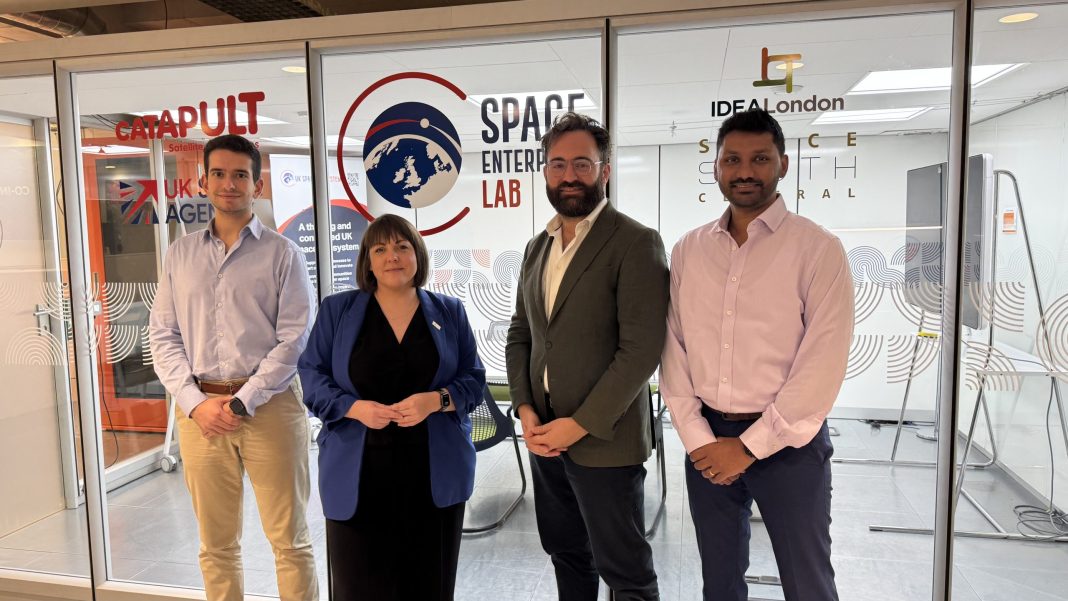

The UK has launched a six-month programme designed to help international space companies establish and grow a commercial presence in Britain.
The UK Space Landing Pad Programme was announced on 24 September by University College London alongside Seraphim Space, Space South Central and the Satellite Applications Catapult. The first five participating companies are expected to be announced later this year.
Selected companies will receive mentorship, regulatory guidance, access to technical facilities and introductions to potential UK customers, suppliers, investors and strategic partners.
The programme will be based at UCL’s IDEALondon innovation hub, with UCL also providing access to academic expertise, talent and research and development support.
Helping overseas startups enter the UK
The pilot is aimed specifically at high-potential international space businesses looking to establish a commercial operation in Britain.
Seraphim Space will provide access to investor networks and commercial expertise, while the Satellite Applications Catapult will connect participating companies with testing facilities, technical specialists and industry networks.
Space South Central will provide links into the wider southern England space cluster, which spans Hampshire, Surrey, London and surrounding areas.
Mark Saxon, chief of external affairs at the Satellite Applications Catapult, said the programme is intended to attract companies that can grow in Britain, add capabilities to the domestic space sector and become suppliers and customers to existing businesses.
The organisers say the intended returns include new UK jobs, revenue and stronger domestic supply chains.
UK competes for international space companies
The launch follows the government’s new UK Space Strategy, which places greater emphasis on national security, industrial growth and domestic supply chains. The strategy includes £7.8 billion in funding through to 2030.
For overseas founders, the Landing Pad provides a structured route into a sector that organisers acknowledge can be difficult for international companies to navigate because expertise, facilities and commercial networks are spread across different parts of the country.
The pilot will test whether bringing those resources together can make the UK a more attractive base for international space companies looking to expand into Britain and Europe.